Inherited code
Review repositories built by contractors, acquired through deals, or handed over by a team that has already moved on.
Paused product
Repo Watch is currently paused as a self-serve product, but the underlying need has not gone away. Teams still inherit contractor code, review AI-assisted repositories, and assess unfamiliar codebases without a fast way to spot test gaps, security hygiene issues, dead code, or risky complexity before shipping.
If this is a real problem in your workflow, tell us how you handle it today and what would need to be true for a tool like this to be worth using.
Most useful: what kind of repositories you review, what makes that hard, and what would have to be true for a tool like this to earn a place in the process.
Register interest
Use this form to describe the repository review problem you need help with, how you handle it now, and what would make a tool like Repo Watch worth using.
Where it fits
Static analysis tools are powerful, but they are often too heavy for quick repository review. Repo Watch was built for narrower moments: before handover, before acquisition, before release, or before trusting a large batch of AI-assisted code.
Review repositories built by contractors, acquired through deals, or handed over by a team that has already moved on.
Get a faster view of test confidence, security hygiene, dead code, and structural signals before trusting code that arrived in large generated batches.
Use a lightweight scorecard when you need a fast decision, not a full AppSec implementation project.
Repo Watch Features
Repo Watch gives teams a faster way to assess repository risk, inspect the issues that matter most, and make a confident call without rolling out a full security programme.
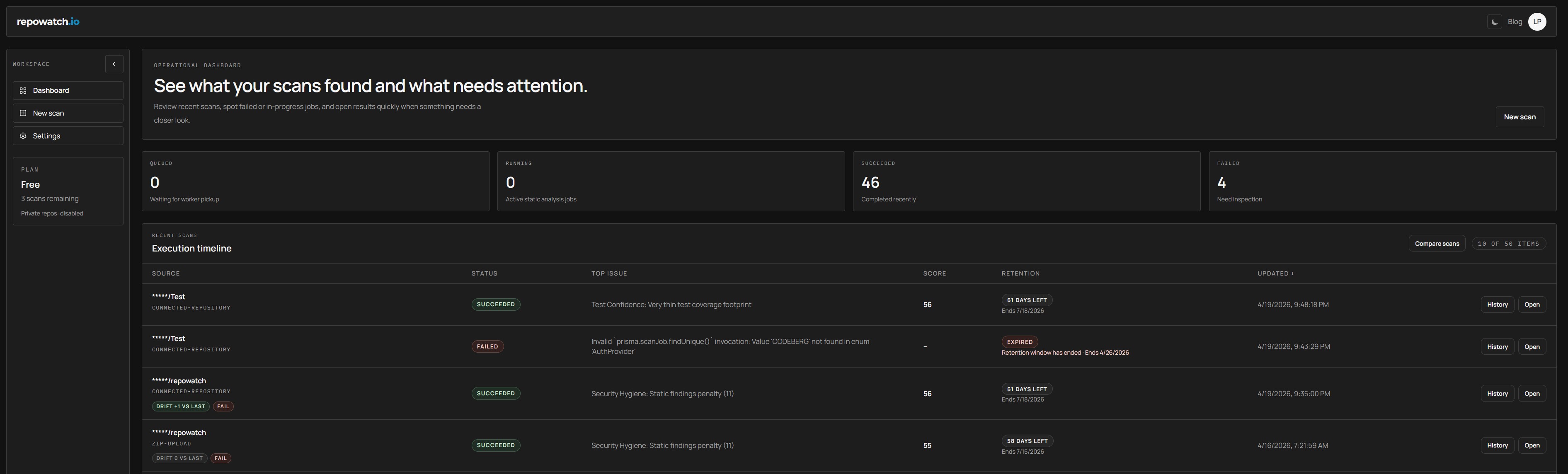
The dashboard turned multiple scans into a quick operating view, so you could see which repositories needed attention first without reading every report end to end.
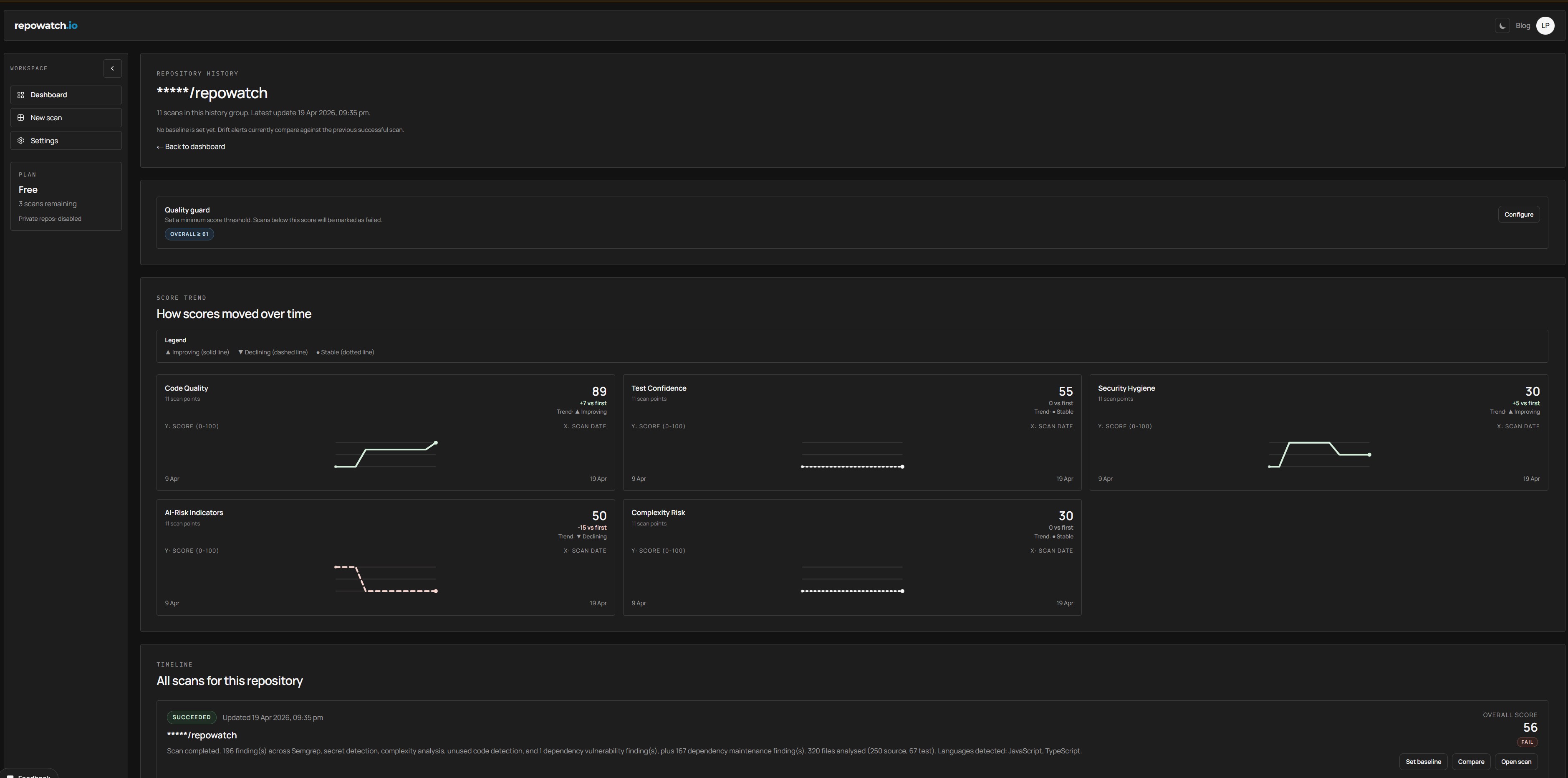
Repository history made scan results more than a one-off snapshot by showing how scores, findings, and regressions changed over time.
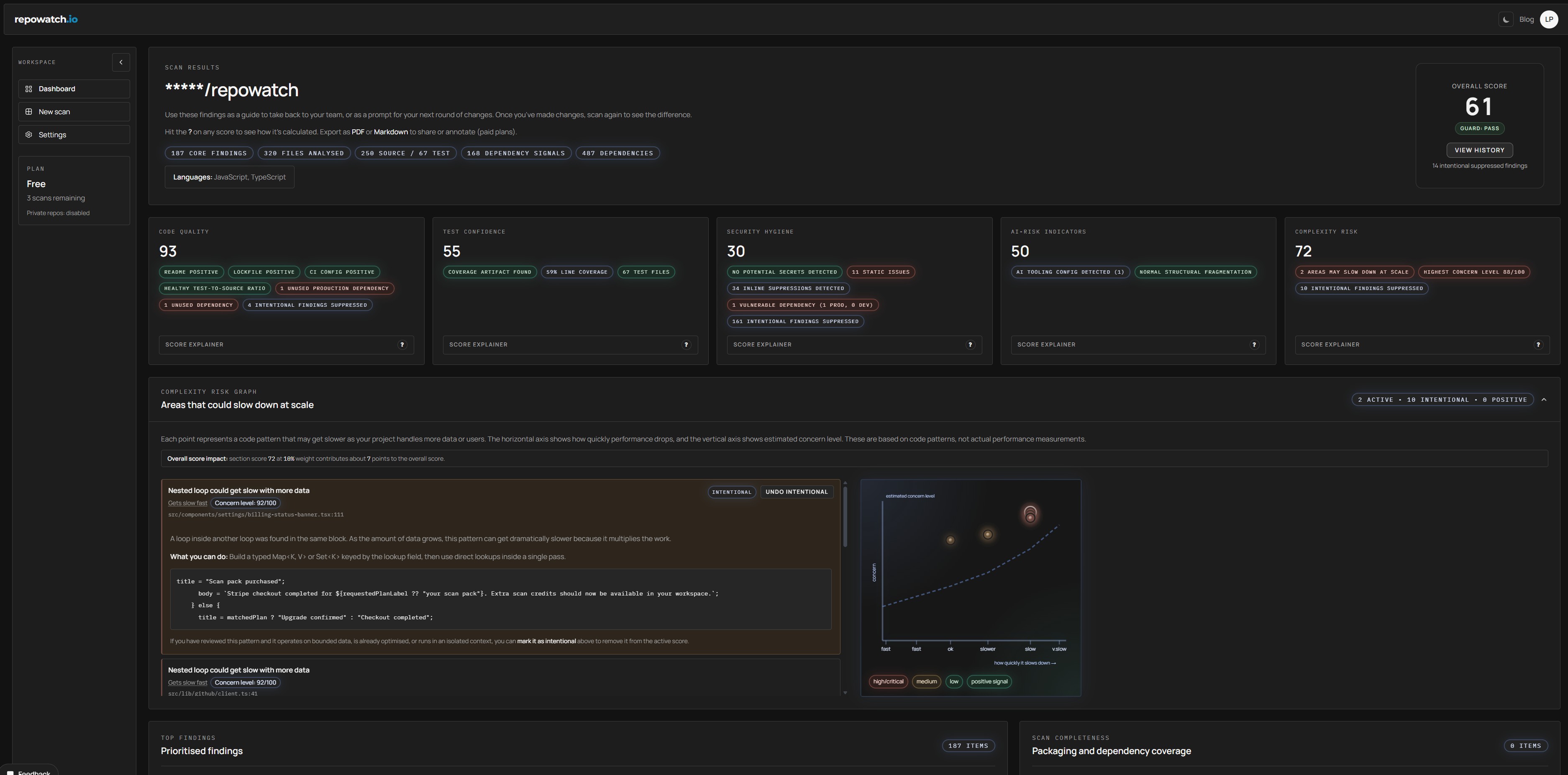
The scan results view grouped findings into clear sections with scoring context, so teams could understand what mattered, why it mattered, and where to start.
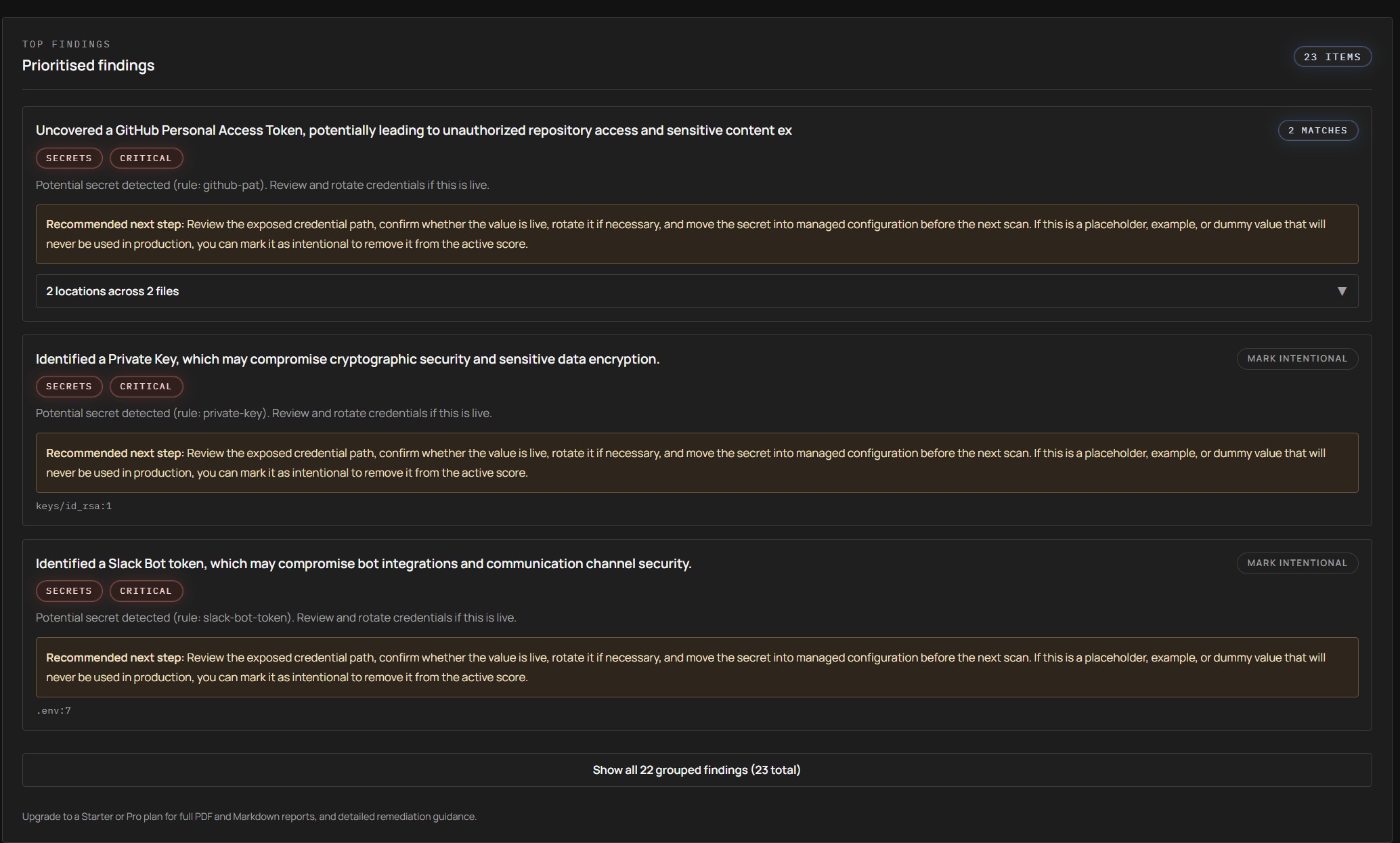
Top findings surfaced the highest-impact problems first, which made the product useful in real review moments where you need a fast call, not a long backlog.